Initial situation: insufficient public transport in rural areas
Whilst public transport in major cities is already very attractive and obtains high modal shares, in rural and some suburban areas it is used nearly solely by schoolchildren and other people, which cannot drive a car their own. This causes:
- too high energy consumption and CO2 emissions
- too many road accidents (3/4 of all fatal accidents happen out of town)
- insufficient chances of mobility and social activity for relevant parts of the population
- unnecessary much car traffic also in the cities because of commuters, excursionists etc.
Importance of intervals and connections
Public transportation in rural areas is inattractive because:
- it is too slow
- the next stop is too far away
- buses and trains operate infrequently
- changing requires long waiting times
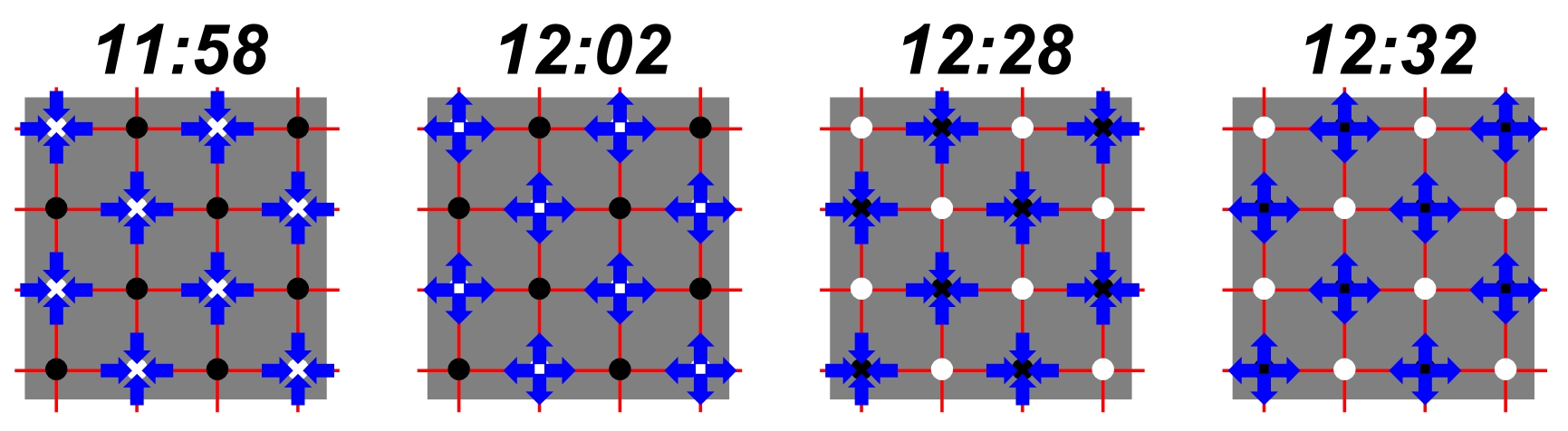 Integrated periodic timetable
Speed, network density, intervals and connections depend each from another: In the theoretically optimal timetable, the integrated periodic timetable, the distance of junction stations with good connections from all origins to all destinations (nodes) is equivalent to the half interval. In case of an interval of an hour and an average speed of 40 km/h, this means about 20 km. Because of this, in a small-scaled regional public transport network, for many relations there cannot be provided connections with short waiting times.
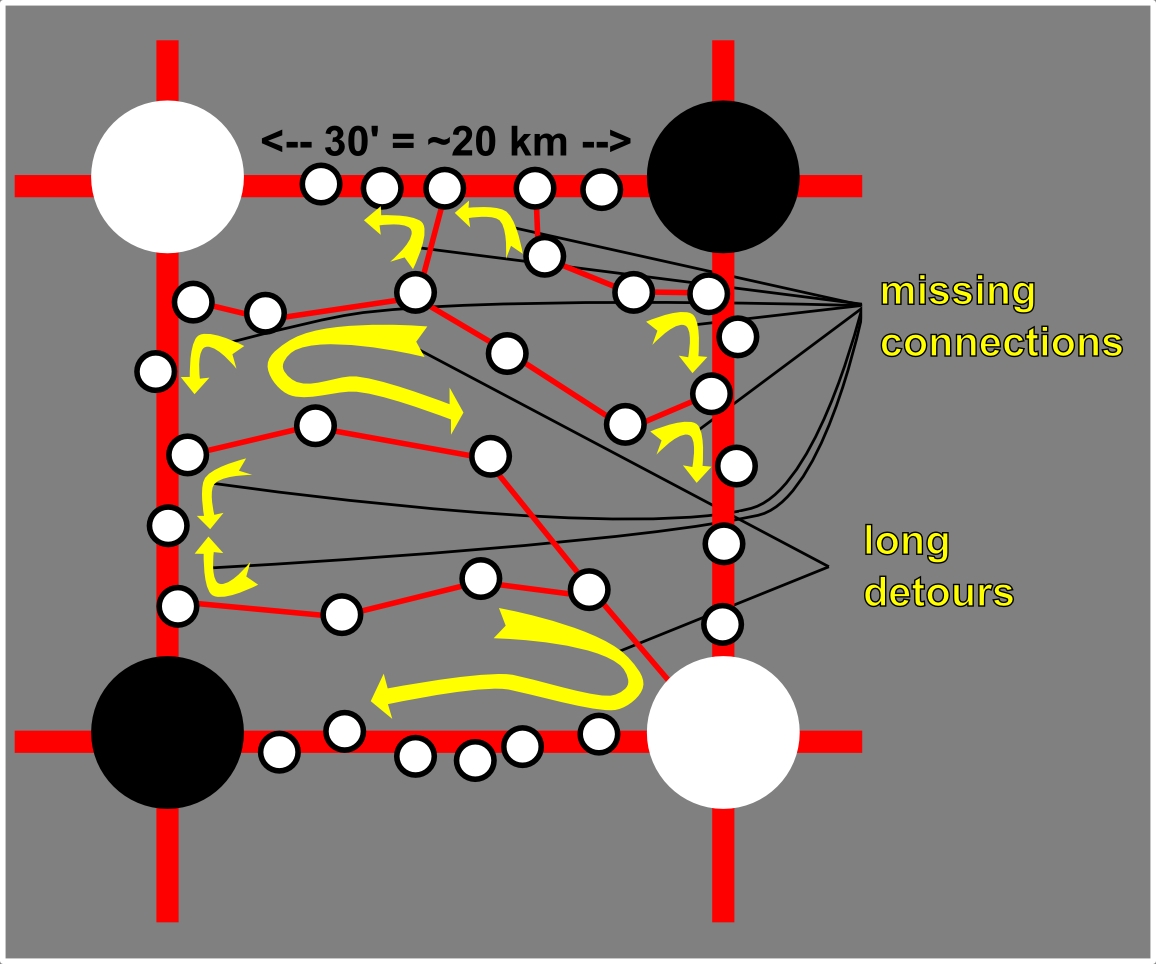
usual intervals | 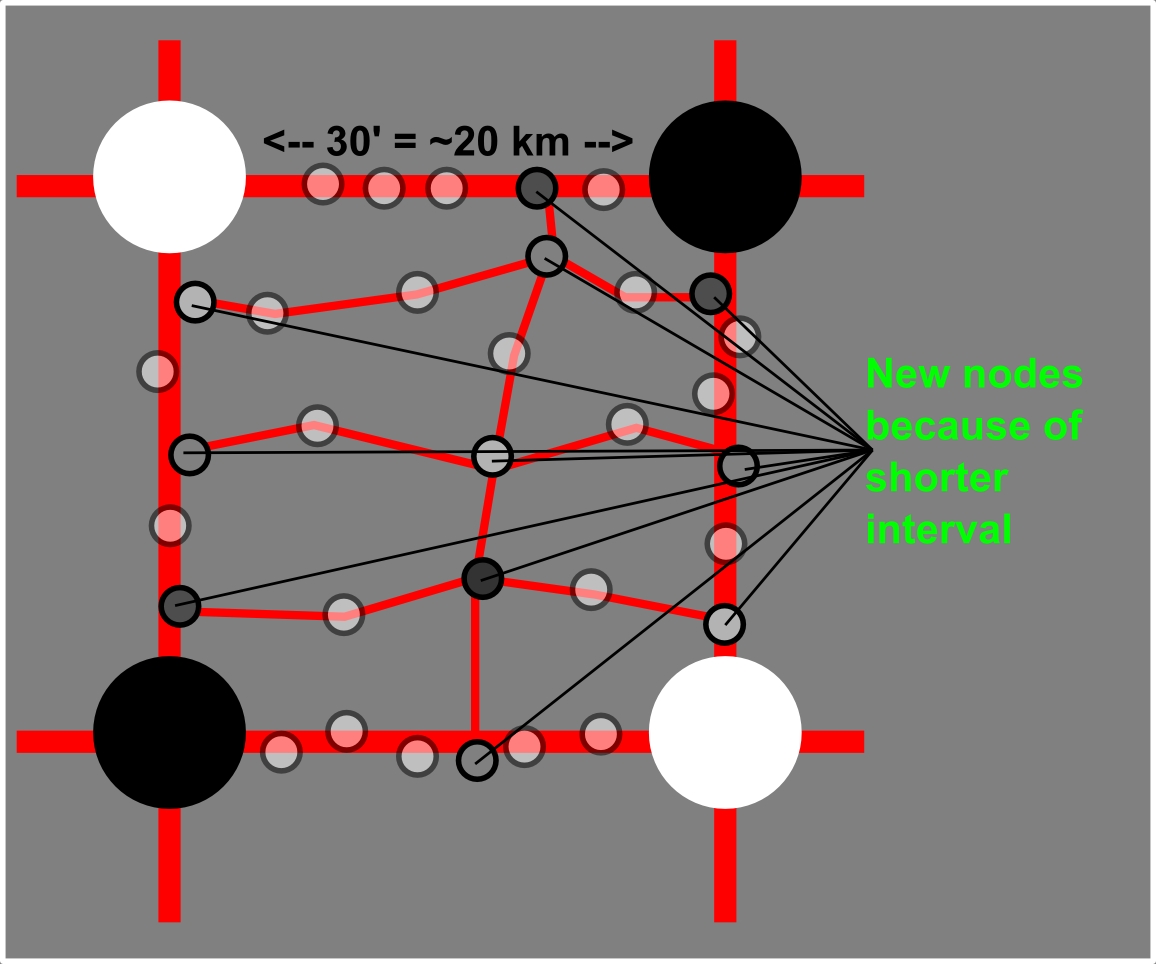
shortened intervals |
As a conclusion, public transport with higher speed, dense network and short waiting and changing times needs not just fast and cheap routes, but particularly short intervals.